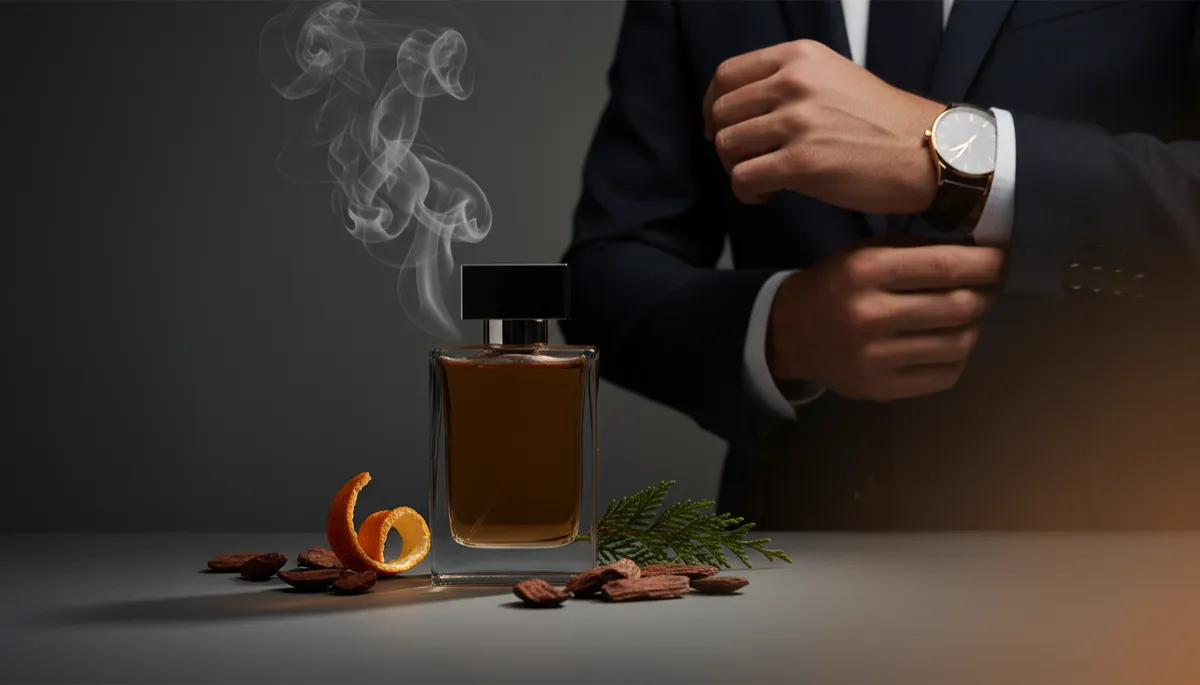
How Scent Boosts Men's Confidence
Men's Lifestyle, Fragrance, Confidence
How Scent Shapes Confidence: The Psychology of Masculine Aromas
Explore how masculine fragrance, psychology, and self-presentation intersect—and why the right scent can quietly transform how you feel, move, and show up in the world.
The Quiet Power of Scent in a Man’s Presence
A sharp suit, clean grooming, steady posture, and measured speech all send a message before you say a word. Yet there is another element of masculine presentation that is just as influential, though almost invisible: your scent. Fragrance is not simply a finishing touch; it is a subtle psychological tool that shapes how you feel about yourself, how you move through a room, and how you experience the moments of your day.
Understanding the psychology of masculine aromas is less about manipulating others and more about becoming intentional with the way you present—and experience—yourself. When chosen thoughtfully, fragrance becomes as personal as your handwriting, reinforcing your identity and supporting the version of you that you want to bring forward: professional, relaxed, bold, or quietly self-assured.
The Psychology Behind Scent and Emotion
Scent has a unique status among the senses. When you smell something, signals travel directly to the brain regions involved in processing emotion and memory, particularly the amygdala and hippocampus. Vision and hearing pass through more “filters” and interpretation steps, but smell takes a more direct route, which is why a single whiff can evoke a feeling before you have words for it. This is the foundation of why fragrance can so strongly influence mood and self-perception without you consciously trying to make that happen.
Over time, your brain builds associations between particular aromas and emotional states. The warm spice of your grandfather’s aftershave, the salty air of a childhood beach, the clean scent of fresh laundry before an important first day—each becomes a kind of emotional shorthand. When a fragrance echoes these familiar notes, it can awaken the same emotional tone: calm, comfort, focus, anticipation, or quiet strength. This is not magic; it is conditioning. Your nervous system is simply responding to patterns it has learned over years of lived experience.
Scent, Memory, and Mood: Why One Spray Can Shift Your Day
Because of this deep link between smell, memory, and emotion, fragrance can act almost like a mental “bookmark.” You can deliberately pair a certain scent with specific contexts—work, evening, training, travel—so that over time, your brain begins to associate that aroma with the mindset you typically inhabit in those situations. The result is a subtle but real shift in mood when you apply that fragrance again, even before anything in your environment has changed.
For example, a clean, fresh citrus scent worn consistently on busy workdays can gradually become linked with clarity, focus, and forward momentum. A deeper, woody or leather fragrance reserved for evening can come to signal unwinding, reflection, or intimacy. The fragrance itself does not create those states out of thin air, but it can nudge your nervous system in a familiar direction, making it easier to step into the mood you associate with that scent.
How Fragrance Influences Self-Perception and Confidence
Confidence is rarely about one element alone. It tends to emerge when multiple signals—internal and external—align. The right fragrance becomes one of those signals. When you wear a scent that feels aligned with who you are and how you want to be seen, it reinforces an internal narrative: I am put together, I am deliberate, I am ready for this. That story, repeated quietly throughout the day, can influence posture, tone of voice, and the way you occupy space.
There is also a simple, practical mechanism at work. Knowing that you have taken care of details—your skin, your clothes, your scent—reduces self-consciousness. You are less likely to wonder whether you seem unprepared or disheveled, and more able to direct your attention outward: to the conversation, the meeting, the moment. In this way, fragrance supports confidence the same way a polished pair of shoes or a well-fitted blazer does—not by impressing everyone around you, but by reassuring you that you have shown up with intention.
💡 Quiet Confidence Tip: Think of fragrance as a private reminder of your standards, not a loud announcement to the room.
The Psychological Language of Masculine Scent Profiles
Different fragrance families carry distinct psychological associations. These are not strict rules, and culture and personal history play a role, but certain patterns are widely recognized in modern masculine perfumery. Understanding them helps you choose scents that match the impression you want to create for yourself and, secondarily, for others.
Woody: Notes of cedar, sandalwood, vetiver, or patchouli often feel grounded, stable, and mature. Psychologically, they suggest reliability, depth, and quiet authority—ideal for men who want to project steadiness rather than flash.
Spicy: Pepper, cardamom, cinnamon, and warm spices lend a sense of warmth and dynamism. These scents can feel inviting and slightly adventurous, hinting at energy and curiosity without being loud by default.
Fresh / Citrus: Bergamot, lemon, grapefruit, and other bright notes read as clean, crisp, and energetic. They are strongly associated with freshness and modernity, often suited to daytime, professional, or active environments where clarity and approachability matter.
Aromatic: Lavender, rosemary, sage, and herbs create a barbershop-like cleanliness with a traditional, masculine edge. Psychologically, they can evoke order, neatness, and a classic sense of grooming—ideal if you appreciate timeless style over trends.
Leather: Leather notes suggest texture, craftsmanship, and a certain rugged refinement. They can communicate maturity, confidence, and a taste for quality materials—similar to the impression of a well-made jacket or briefcase.
Tobacco: Modern tobacco accords are often sweet, honeyed, and slightly smoky. They hint at nostalgia, depth, and contemplation rather than literal smoke. Psychologically, they can feel introspective, cozy, and complex, suiting reflective evenings more than busy mornings.
Amber: Amber-based scents (often with resins, vanilla, and warmth) feel enveloping and sensual. They can communicate comfort, intimacy, and richness—best when you want to lean into warmth rather than sharpness or coolness.
Musk: Musks range from clean and skin-like to deeper and more animalic. Clean musks suggest softness and subtle sensuality, while richer musks can feel more primal. Used with restraint, they add an undercurrent of physical presence without dominating the composition.
Aquatic: Marine and watery notes evoke sea air, cool breezes, and open spaces. They often feel relaxed, casual, and contemporary, aligning with leisure, travel, or weekend settings where you want to appear easygoing and unfussy.
Most modern masculine fragrances blend several of these families. The key is noticing which directions you naturally gravitate toward and how each profile makes you feel when you wear it for a full day, not just in the first five minutes on a tester strip.
What Your Fragrance Communicates: Professional, Relaxed, Bold, or Mysterious
Just as a navy blazer sends a different signal than a leather biker jacket, different fragrance styles subtly shape the impression you give. Again, the goal is not to engineer reactions but to ensure your scent is in harmony with the environment and persona you want to embody there.
Professional & Polished: Fresh citrus, light woods, and clean aromatic notes tend to read as competent and modern. They suggest organization and clarity—ideal for offices, presentations, or interviews where you want to appear sharp yet unobtrusive.
Sophisticated & Refined: Woody, leather, and subtle amber compositions often feel more tailored and grown-up. They pair naturally with structured clothing and considered grooming, reinforcing an image of depth and discernment.
Energetic & Dynamic: Brighter citrus, green, and some spicy fragrances convey movement and vitality. These scents work well for daytime, creative work, or social settings where you want your presence to feel lively and engaged rather than heavy.
Relaxed & Casual: Aquatic, soft musk, and airy aromatic scents lean into ease and comfort. They suit weekends, travel, or low-key evenings when you prefer to appear approachable and laid-back without neglecting detail.
Mysterious & Bold: Darker woods, tobacco, resinous amber, and richer musks can feel more enigmatic and intense. They are best in measured doses and in environments that can hold that weight—dinners, events, or nights when you intentionally step into a more dramatic persona.
📌 Key Takeaway: Let the setting guide your scent in the same way it guides your clothing. Choose what supports the role you are stepping into.
Fragrance, Grooming, Style, and Masculine Presentation
A man’s presence is rarely about a single standout element. It is the coherence between details that creates an impression of confidence. Fragrance sits alongside grooming, clothing, posture, and communication as one of the quiet signals that say, “I pay attention. I care how I show up.”
When these elements are aligned, they reinforce each other. A clean, well-maintained haircut, cared-for skin, and pressed clothing pair naturally with a fragrance that smells equally considered. A slightly rugged beard, textured hair, and heavier fabrics might harmonize better with a warmer, woodier or leathery scent. Your masculine presentation feels most authentic when your fragrance matches the story your appearance is already telling, rather than competing with it.
Communication matters here as well. You do not need to announce what you are wearing, but you do communicate something about your relationship with yourself. A man who chooses a fragrance thoughtfully, applies it with restraint, and wears it consistently signals a kind of inner order: he knows his preferences, he respects shared space, and he understands that true style is more about coherence than spectacle.
Authentic Confidence vs. Chasing the Strongest or Most Expensive Scent
In a market saturated with hype, it is easy to assume that the most expensive, rare, or powerful fragrance will automatically make you more confident. In reality, confidence comes from congruence, not price tags or projection. A scent that feels too loud, too sweet, or too foreign to your personality can actually create subtle discomfort. You may feel like you are wearing a costume rather than an extension of yourself.
Authentic confidence is built when the fragrance on your skin matches the way you see yourself—or the man you are steadily becoming. That may be a simple, affordable cologne that you wear with consistency, or a niche composition that resonates with your taste. The key question is not, “Will this impress everyone?” but rather, “Do I feel more like myself when I wear this?” If the answer is yes, the fragrance is doing its job.
⚠️ Grounded Perspective: Fragrance can support how you feel and present yourself, but it does not replace character, integrity, or genuine social skills.
Finding Your Personal or Signature Scent
Identifying a signature scent is less about finding the one fragrance you will wear forever and more about discovering a small wardrobe of scents that feel unmistakably “you.” This process benefits from patience and curiosity rather than impulse buying after a single spray at the counter.
Start with your instincts. Think about smells you already enjoy: fresh laundry, forests, leather goods, spices in the kitchen, the sea. These preferences often translate directly into fragrance families you will feel comfortable wearing.
Test on skin, not just paper. Fragrances evolve differently on each person. Wear a sample for a full day to see how it develops from the first spray through the dry-down, and pay attention to how it makes you feel at each stage.
Observe your own response. Do you stand a little taller? Do you forget about it until a subtle waft reminds you and makes you feel good? Or do you feel self-conscious and over-scented? Your body language and comfort level are better indicators than compliments alone.
Curate a small rotation. Many men find it useful to have one or two daytime scents (often fresher or lighter) and one or two evening or cold-weather scents (richer, deeper). Together, these can function as your personal olfactory signature without locking you into a single bottle for every situation.
Over time, your signature becomes less about a specific brand name and more about a recognizable style: perhaps clean, woody, and understated, or warm, spicy, and quietly sensual. When you find that pattern, you will notice that new fragrances either fit your personal “code” or do not—and that clarity is deeply confidence-building.
Fragrance as a Daily Ritual and Transition Tool
Beyond identity, fragrance can serve as a ritual of transition—a small, intentional act that marks the shift from one environment to another. Just as changing from loungewear into tailored clothing can signal “work mode,” a few sprays of a chosen scent can tell your mind that it is time to switch gears.
Before work, a crisp aromatic or citrus fragrance can become part of your mental warm-up, aligning with shaving, dressing, and reviewing your day’s priorities.
After hours, a warmer woody, leather, or amber scent can mark the deliberate move into personal time, conversation, or reflection, helping you leave the day’s noise behind.
On weekends or travel, an aquatic or relaxed musk can signal a slower pace, curiosity, and openness to new experiences.
These rituals do not need to be elaborate. The power lies in repetition: the same scent, in the same context, over time. Your brain begins to recognize the pattern and responds more quickly, making it easier to shift from one version of yourself—the focused professional, the present partner, the solitary thinker—to another with intention rather than drift.
Bringing It All Together: Scent as Self-Presentation, Not Performance
At its best, fragrance is not a mask or a trick. It is a refined part of how you present yourself to the world and, just as importantly, how you experience yourself from the inside out. By understanding the psychology of masculine aromas—their links to memory, mood, and self-perception—you can choose scents that support the man you are becoming rather than chase trends or external approval.
Think of your scent the way you think of your voice: uniquely yours, capable of subtle modulation, and most powerful when it is authentic. Paired with considered grooming, coherent style, steady posture, and clear communication, the right fragrance becomes a quiet but constant ally—reminding you of your standards, your story, and the presence you intend to bring into every room.
🎯 Final Thought: You do not need the loudest scent in the room. You need the one that feels like a refined extension of who you already are.
Next Steps: Curate Your Own Confident Scent Story
If you are ready to refine your fragrance wardrobe, start small. Explore a few samples across woody, fresh, and warm profiles; wear each for a full day in real life, not just in-store; and notice which ones make you feel most aligned, composed, and quietly powerful. Over time, you will build not just a collection of bottles, but a set of rituals and identities that support the life you are designing.
Looking for guidance on pairing fragrance with your wardrobe, grooming routine, and lifestyle? Explore our latest men’s style and grooming articles for curated recommendations, practical routines, and psychologically informed insights to help you present your best, most authentic self—one considered detail at a time.